
Let me begin by getting a few things out of the way. First, I don’t know a single teacher who doesn’t wish we could go back to normal. We know that the in-person format of education is exceptionally important for the social-emotional growth of students, and want nothing more than to have them back in our classrooms, ready (or not) to learn. There is no dispute about that.
However, there are simply too many factors making a ‘return to normal’ impossibly dangerous for teachers, students, and parents. Starting with:
1. New COVID-19 cases are continuing to rise
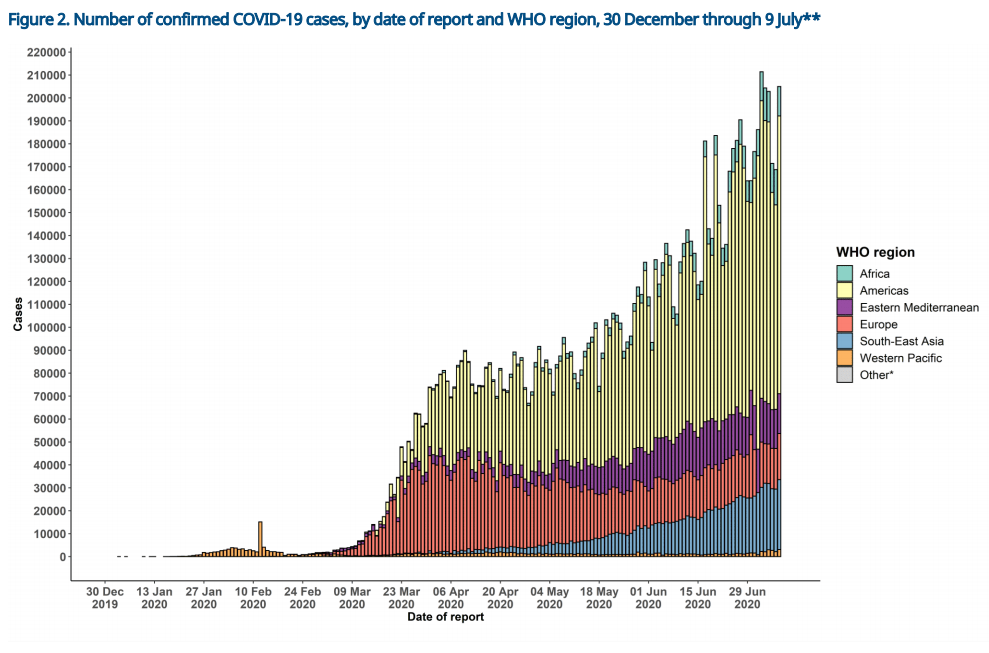
The above chart shows the number of COVID-19 cases, starting all the way back in December. As you can see, the number of cases in the Americas – primarily the United States – continues to rise, as states continue to report record numbers of new cases in the past few weeks. At the date of this writing, there is a total of over 3,000,000 cases in the United States alone, with over 132,000 deaths. Those numbers are staggering and frightening, and should not be discounted.
This recent spike in cases comes as officials began opening the country back up again, despite relevant data showing that was a bad idea. As a result, states are now being forced to close things down once more and issue mask orders nationwide. So why then are schools being forced to reopen, if so much of the rest of the country is being forced to close down?
2. Social distancing in schools is unreasonable
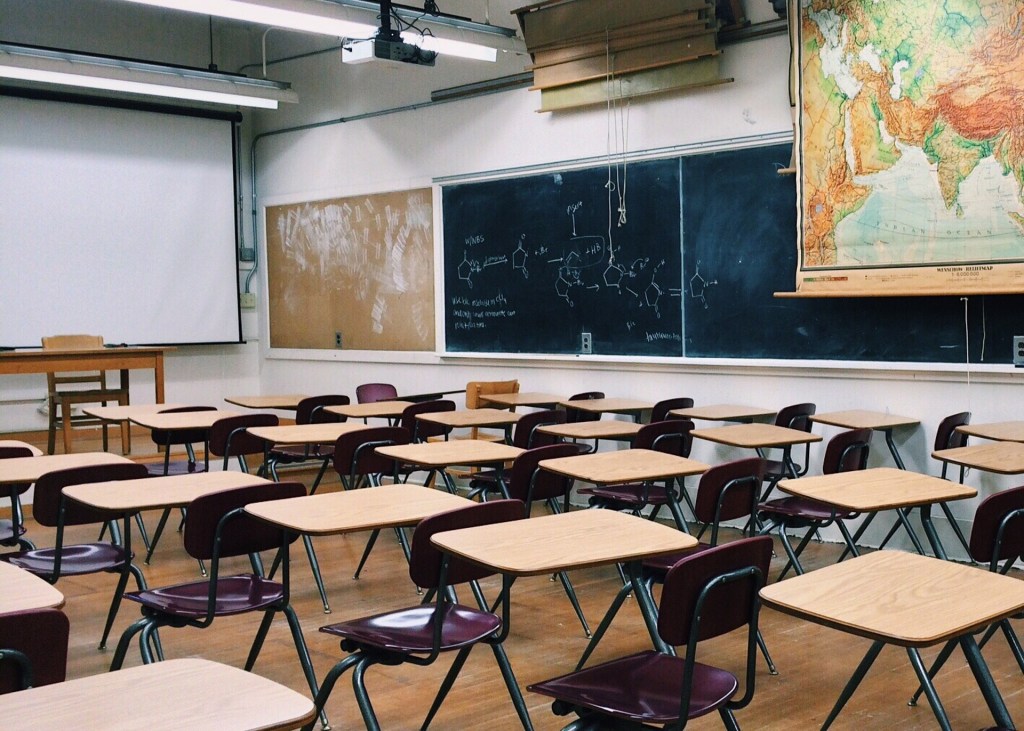
Look at the classroom in the image above. I’ll be honest with you – even though this is what came up when I Googled “average classroom,” I’ve not seen a classroom that large before in my entire educational career, except perhaps at university. But notice how cramped it still is – those desks certainly aren’t 6 feet apart, as per social distancing guidelines.
The average class size across the United States ranges from as low as 18 students per class to up to 35, with reports of class sizes as large as 40 in some areas. Even in a room as large as the one in the picture above, trying to give 6 feet of distance for even 18 students – not to mention the teacher – is a struggle. If classes have 30-40 students, that task becomes nigh impossible, and runs a greater risk of spreading infection.
This also doesn’t take into account the risks that would come from students having to go to other highly-populated areas – crowded hallways become epicenters for disease spread, locker rooms are infestation bonanzas, and the school cafeteria is a viral pit of doom just waiting to happen. There are some talks about the utilization of outdoor spaces, but not every campus has the space to make this work. The danger is still there.
3. That’s not to say anything about school buses
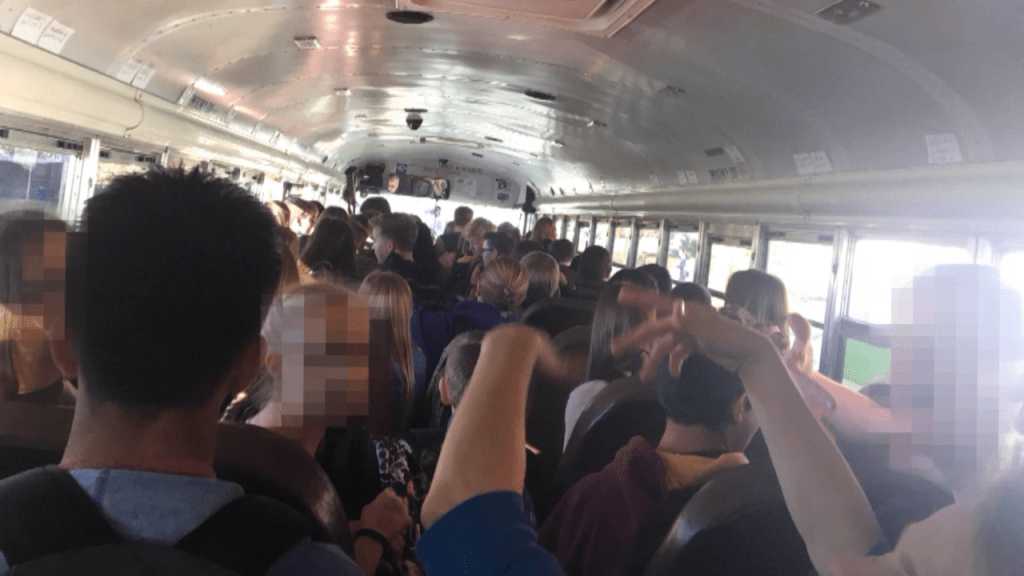
School buses are another place where students are far more likely to be exposed to the virus. Approximately 26 million children use school buses as their form of transportation to and from school each day, and in recent years there have been numerous reports about overcrowding on buses taking place (like in the image above).
Some districts are actually planning for this, purchasing more buses, hiring more drivers, and/or altering bus routes to account for social distancing. But many districts do not have the budget or resources necessary to make that happen. So how can we reasonably allow schools to open up normally when there is such a large risk factor?
4. Children are still susceptible to COVID-19.
Here’s where I actually have some sort-of good news: several studies have found that children under the age of 18 are less likely to contract and spread the virus. But here’s where there is still a problem:
They can still get sick.
In fact, while children are assumed to be less likely to contract the virus, some areas are still seeing a rise in the number of child cases of COVID-19. There are a few factors for this: as states opened up, more children were released from the confines of their homes and thus had more interaction with infected persons; we haven’t been seeing enough data to get a clear picture of how children are impacted by the virus; or simply that the virus has mutated and children are more susceptible than they were before.
In any case, we need to be careful about how we approach the upcoming school year and how we design instructional planning. Assuming that children can’t contract the virus is very different from assuming they are less likely to contract it.
What are our options?
Luckily, there are some options schools and districts can take to adequately prepare for this upcoming school year. And we have the time to do it! One of the biggest challenges with the switch to remote learning last spring was how sudden it was – within a week or two, all students and staff were suddenly expected to work from home, and districts scrambled to have some sort of plan. It was messy, but luckily a lot of grace was involved across the board and focus was put on students’ social-emotional needs.
So what are some of the things we can do to ensure that students and staff are safe this year AND maintain a quality education?
- Invest in online/remote learning. Remote learning has proven to have some great benefits, the least of which is that the risk of contracting the virus is dramatically reduced if you aren’t having physical contact with other people. Planning a curriculum that can quickly switch between in-person and online learning will also make it easier for when things do (hopefully) return to normal and students can safely return to school buildings, so that learning isn’t lost in the transition.
- Focus on social-emotional learning. Students are still going to be struggling with the ramifications of COVID-19: some will have lost friends or family members, some will have parents who have lost their jobs, and others will simply be stressed about not seeing their colleagues for so long. SEL practices are going to be essential moving forward.
- Focus on safety first. Yes, opening schools is important, but the safety of those who will be returning to school campuses is far more pressing. With reports nationwide of massive substitute teacher shortages, more pressure will inevitably be put on classroom teachers to remain working even whilst sick, risking additional spread of the disease and putting those teachers more at risk of serious injury or even death. Safety is imperative if schools are to open back up.
These are just a few suggestions – there are thousands more little changes that can be done to ensure that schools open up safely and responsibly. Regardless, however, one thing is clear: the current path of simply ‘returning to normal’ is not our only option.
 Jacob Ryckman